


Facelift Glasgow (1971-1976): When a City Came Together to “Let Glasgow Polish”
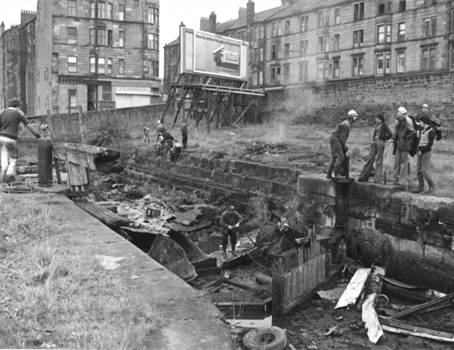
A City That Belonged to Its People
In the early 1970s, Glasgow was experiencing rapid change. Industrial decline, redevelopment and negative media portrayals were shaping the way the city was perceived both at home and beyond. Yet for many Glaswegians, the city was still a place of deep pride, history and community.
It was within this context that Facelift Glasgow emerged – a campaign that encouraged people to take responsibility for improving the appearance of their surroundings. Supported by The Scottish Civic Trust, the initiative promoted a simple but powerful idea: the future of the city depended not only on institutions, but on everyday actions of its citizens.
Participants were encouraged to adopt a simple mindset:
“I belong to Glasgow. Be able to say it with pride.”
But how did this idea first take shape? The origins of Facelift Glasgow reveal how a simple inspiration could spark a city-wide movement.
The Idea
The concept for Facelift Glasgow grew out of a study by the Scottish Civic Trust of an environmental initiative known as Operation Spring Clean. The study raised an important question: what might happen if the same spirit of collective action were applied to Glasgow?
The answer was the creation of a campaign that aimed to encourage as many Glaswegians as possible – individuals, schools, community groups and businesses to take part in improving the appearance of the city.
Financial support came from several civic organisations, including the Corporation of Glasgow, the Trades House, the Merchants House and the Saints and Sinners Club. Yet the campaign’s success did not depend on funding alone. Its real strength lay in the belief that small actions, taken by many people, could transform the environment of the city.
Small Actions That Anyone Could Take
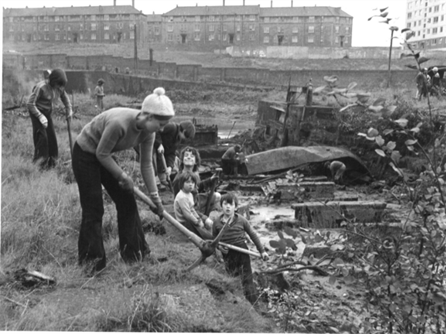
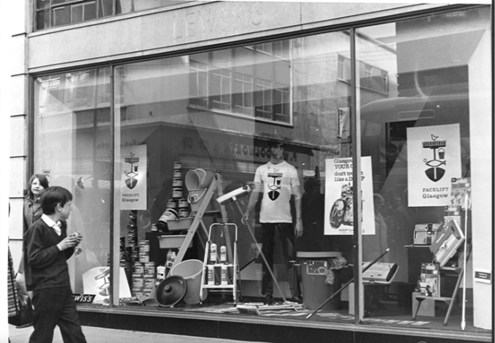
Facelift Glasgow was built around the idea that everyone could contribute, regardless of their time, resources or location. The campaign encouraged practical improvements that communities could organise themselves.
Both indoor and outdoor projects were encouraged, making it possible for schools, local organisations and residents’ groups to participate. The principles behind the campaign were simple:
• Don’t abuse shared amenities
• Keep them clean
• Keep them tidy
These small acts of care began to change how people viewed their neighbourhoods. But individual effort was only the beginning – the campaign truly came to life when communities began working together.
Communities Taking Ownership
Facelift Glasgow encouraged people not only to act individually, but to organise collectively.
Schools were encouraged to form committees. Neighbours were invited to collaborate on shared projects. Streets, terraces and tenements began forming their own local improvement groups.
The spirit of cooperation proved especially powerful in Glasgow’s tenement neighbourhoods. As noted by Sandy Dalling in the 1973 Scottish Civic Trust Yearbook:
“Too many tenement back-court improvement schemes which has resulted in the formation of a number of Street, Terrace, or Tenement Associations.”
These groups focused particularly on improving back courts, communal spaces that were often overlooked but played an important role in daily life. However, as the campaign developed, organisers realised that the movement could become even more inclusive by encouraging smaller, more accessible projects across the city.
From Back Courts to City-Wide Action
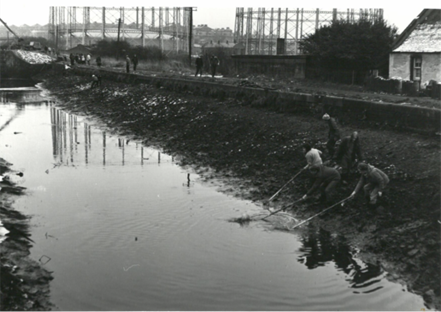
During the third phase of Facelift Glasgow, the campaign shifted its emphasis away from large-scale back-court schemes and toward smaller projects that allowed broader participation. This change opened the door for many new initiatives, ranging from local clean-ups to tree planting and environmental restoration.
Across Glasgow, communities began to reshape their surroundings in ways that were both practical and symbolic. These projects demonstrated that environmental improvement could also strengthen civic pride and community spirit.
Planting the Seeds of Change
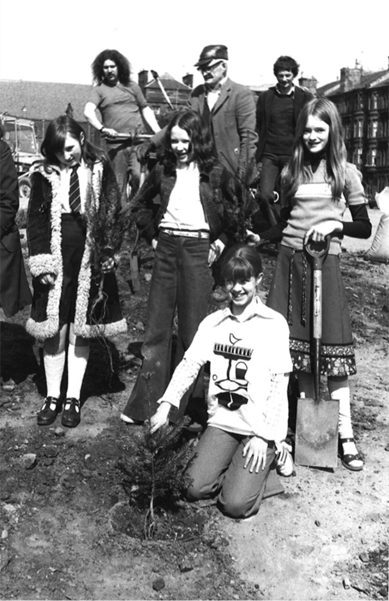
One of the most inspiring examples took place in Drumchapel, where local schoolchildren helped plant 600 trees donated by the Forestry Commission. This project not only improved the landscape of the neighbourhood but also encouraged young people to take pride in caring for their environment. Elsewhere, volunteers from the Glasgow Tree Lovers Society carried out a clean-up of the grounds of St Andrew’s-by-the-Green, the city’s oldest Episcopal church.
These projects illustrated how the campaign could bring together environmental improvement, heritage conservation and community participation.
Yet Facelift Glasgow was about more than physical change. It also sought to change how the city was seen – both by its residents and by the wider world.
Changing the Story of Glasgow
In the early 1970s, Glasgow often appeared in the media as a city struggling with vandalism, poverty and urban decline. Facelift Glasgow aimed to challenge this narrative by highlighting the pride and energy of its communities.
The campaign reflected a core belief expressed by The Scottish Civic Trust:
“The aesthetic impulse behind Facelift Glasgow is the belief that everyone has a right to live in pleasant surroundings”
By encouraging citizens to actively care for their environment, the campaign demonstrated that Glasgow was not simply a city facing challenges – it was also a city capable of renewal through collective effort. The shift in perception would become one of the campaign’s most important achievements.
A Legacy of Civic Pride
Facelift Glasgow ultimately acted as a catalyst for wider environmental improvements across the city. While local and national governments held responsibility for maintaining public spaces, organisers recognised that their efforts could never be fully successful without the support and involvement of the people who lived there.
The campaign showed that civic pride and community action could reshape neighbourhoods and strengthen the social fabric of the city. Its message was captured in a motto that remains memorable today:
“Let Glasgow Polish”
Why Facelift Glasgow Still Matters
Facelift Glasgow formed part of a wider movement during the 1970s that encouraged communities across Scotland to take greater responsibility for their local environment. Although Facelift Glasgow is no longer widely remembered, and much of what we know about it comes from records and publications produced by The Scottish Civic Trust in the 1970s, these documents reveal an inspiring campaign that remains remarkably relevant today. The campaign demonstrated that improving the quality of urban life is not only the responsibility of governments or planners. It also depends on the care, pride, and participation of local communities.
as researched and written by Michelle Edgar